The history and architecture. The pueblo of Tuzigoot grew slowly over
a 400-year period, beginning first with a series of small romms in the center
of the hilltop. Apparently, there was no overall plan and rooms were added
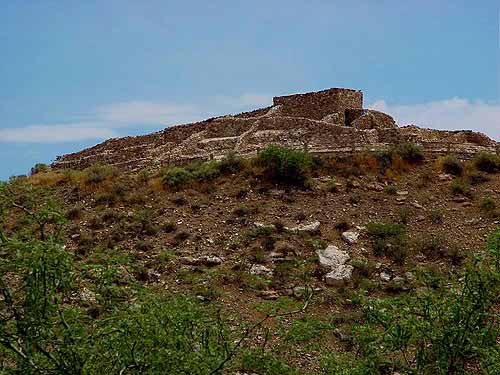
as the population increased. The pueblo extended about 500 feet long on
a north-south axis along the ridge top with the main section about
100 feet wide.
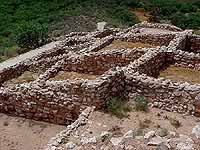
Different levels of rooms in the
southern corner of the pueblo
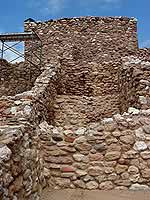
Room on top of the pueblo
with a flat look-out roof
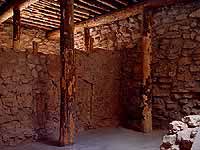
Limestone and sandstone deposits from the ridge provided the building
materials for the walls, while juniper, pine and cottonwood trees were
hauled up the hillsides for roof support posts. In time-honored fashion,
new rooms were built on the ruins of old ones.
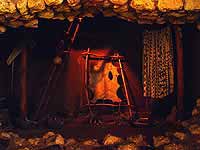
Entry to most rooms was by way of ladders through roof top hatches and
the contiguous design was a good example of prehistoric thermal efficiency.
At its most productive time - the late 1300s - the Tuzigoot pueblo
contained 86 ground floor rooms and, possibly, 15 second story rooms, with
about 225 people living there.